If your organization has been trying to procure NVIDIA H100, H200, or B200 GPUs through standard channels and keeps hitting walls, you are not alone. Enterprise IT leaders across financial services, healthcare, manufacturing, and technology have spent the better part of two years discovering that the normal procurement process simply does not work for this hardware class anymore.
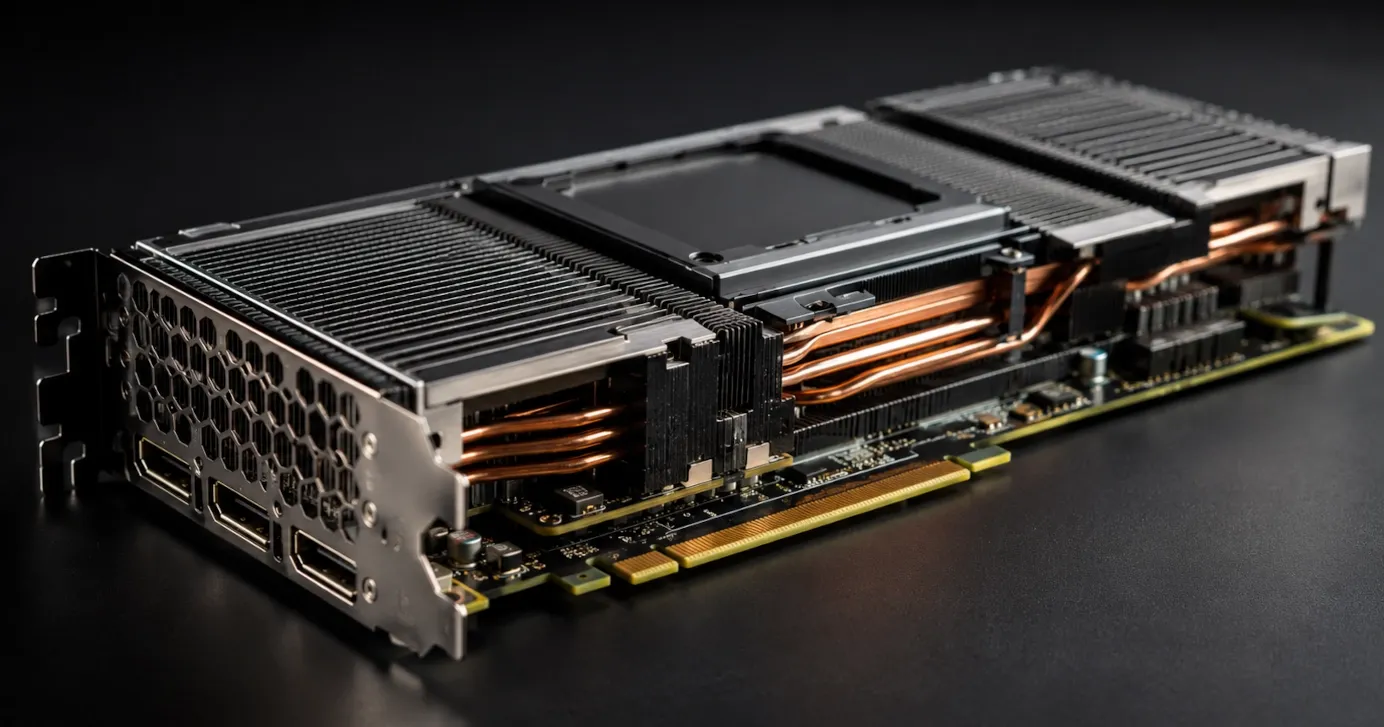
This guide covers why that is, what the secondary market actually looks like for organizations that do this the right way, and what questions your procurement team should be asking before committing to any transaction.
Why Enterprise GPU Allocations Are Still Unavailable in 2026
The shortage of NVIDIA data center GPUs is not a temporary supply hiccup. It is a structural problem rooted in three compounding constraints.
Hyperscaler preemption. Microsoft, Google, Meta, and Amazon placed multi-billion-dollar forward orders for Blackwell-series GPUs in 2025, consuming the majority of NVIDIA's available allocation capacity through the end of 2026 and into 2027. That activity effectively crowded out mid-market and enterprise customers who previously purchased through standard OEM channels and authorized resellers.
Manufacturing bottlenecks that are not resolving quickly. H100, H200, and Blackwell-series GPUs all depend on HBM3e high-bandwidth memory and TSMC's CoWoS advanced packaging process. CoWoS capacity is fully allocated through at least mid-2027. Samsung and Micron are ramping HBM production, but neither will meaningfully ease the shortage before late 2026 at the earliest. As Blackwell ramps and pulls on the same constrained packaging capacity, it compounds the supply problem for Hopper-series hardware still in demand.
Blackwell backlog is not a relief valve. B200 and GB200 NVL72 systems entered 2026 with a backlog exceeding 3.6 million units. Even organizations that placed Blackwell orders early face wait times stretching into the second half of 2026 and beyond. For enterprises that need compute capacity now, waiting in queue is not a viable option.
The result is a market where H100 rental prices have actually increased since late 2025 despite an aging generation, because enterprises with no allocation alternative are competing for whatever supply exists. For organizations that need to own, not rent, the secondary market is often the only practical path.
The Risks of Sourcing NVIDIA GPUs Without a Verified Partner
The secondary market for enterprise GPUs is real and active. It is also, without the right process, genuinely dangerous. The risks are not theoretical.
Counterfeit and relabeled hardware. High GPU prices create strong financial incentive for counterfeit supply. Buyers transacting through unvetted brokers or online marketplaces have received relabeled A30s sold as A100s, boards with mismatched firmware, and units with manipulated VBIOS. Identifying counterfeit hardware requires technical inspection that most procurement teams are not equipped to perform.
Export control violations. NVIDIA data center GPUs are classified under Export Control Classification Numbers 3A090 and 3A991 under the Export Administration Regulations administered by the U.S. Department of Commerce's Bureau of Industry and Security. Any transaction involving these GPUs, including secondary market purchases, requires proper end-user documentation. BIS has been active in enforcement: in January 2026, BIS entered into a $1.5 million settlement with a European company over the unlawful transfer of semiconductor items subject to the EAR. Civil penalties for violations can reach approximately $370,000 per violation or twice the value of the transaction, whichever is greater. Criminal penalties for willful violations can reach $1 million and up to 20 years imprisonment. Most buyers in the secondary market have no idea this obligation exists until they are already exposed.
Chain-of-custody gaps. Even hardware that is genuine and export-compliant can carry legal or operational risk if its custody history is unclear. Hardware that passed through undisclosed intermediaries, was originally sold into restricted regions, or lacks documented provenance creates ongoing exposure for the buyer. A chain-of-custody gap is not just a documentation problem. It is a liability that follows the hardware.
What a Compliant Secondary Market GPU Purchase Actually Requires
Buying NVIDIA data center GPUs through the secondary market is legal and increasingly common among enterprise organizations. Doing it correctly means treating compliance as a precondition of the transaction, not an afterthought.
EAR/BIS end-user certification comes first. Before any GPU transaction, the buying organization must complete end-user documentation establishing the intended use and confirming the hardware will not be diverted to restricted parties or destinations. This is a regulatory requirement, not a vendor preference.

Seller vetting is non-negotiable. Supply-side partners must be screened for hardware authenticity, provenance, and their own export compliance history. This is not a process most buyers can execute independently. It requires established relationships and a documented vetting methodology.
Chain-of-custody documentation travels with the hardware. A compliant transaction produces a paper trail covering the original sale, any intermediate transfers, the compliance certification, and delivery. That documentation is what protects the buyer in an audit or enforcement scenario.
Logistics and delivery coordination matters. High-value, high-sensitivity hardware requires professional handling. Damage, loss, or undocumented transfer during shipping can create additional compliance exposure.
Which NVIDIA GPUs Can Be Sourced Through Secondary Market Channels
Not all GPU models have meaningful secondary market liquidity. Organizations with existing installations, data centers in refresh cycles, or cloud providers rotating inventory do generate supply of enterprise-grade hardware. The models with the most secondary market activity in 2026 include:
A-Series: A100 SXM4 and PCIe in both 40GB and 80GB configurations. A100 continues to be widely deployed for inference workloads and is available with predictable pricing in the secondary market.
H-Series: H100 SXM5 and PCIe, and H200 SXM5 and PCIe. H100 secondary market supply exists but is tightly held, and prices reflect ongoing demand. H200 secondary availability is more limited.
B-Series: B100, B200, and GB200 NVL72 configurations. These are harder to find through secondary channels given how recently they entered production, but verified supply does exist for organizations with the right sourcing relationships.
Complete systems: DGX A100, DGX H100, HGX baseboards, and NVLink configurations. Systems procurement through secondary channels requires additional verification but is viable for organizations building out AI infrastructure without OEM lead time.
What to Look for in an Enterprise GPU Sourcing Partner
If your organization is pursuing secondary market GPU procurement, the partner you work with is the single most important variable in the transaction. Here are the questions that matter.
Do they handle EAR/BIS compliance documentation, or do they leave it to you?
A legitimate sourcing partner leads with compliance. If a potential partner treats export documentation as optional or secondary, that is a meaningful red flag.
How do they vet their supply-side partners?
Ask specifically about chain-of-custody verification, provenance checks, and hardware authentication processes. Vague answers indicate a brokerage model without real seller oversight.
Are they actively working your requirement, or just listing inventory?
The best enterprise GPU sourcing operations have dedicated teams working specific buyer requirements against a live seller network. Passive catalog-based sourcing rarely surfaces the hardware organizations actually need, on the timelines they need it.
Do they handle logistics and documentation end-to-end?
Coordinating delivery of high-value GPU hardware across multiple parties creates risk at every handoff. A full-service partner manages this rather than handing it off to the buyer.
Can they document their track record?
Enterprise-grade sourcing operations have completed transactions they can reference. Ask for specifics on volume, hardware types, and compliance outcomes.
How ReluTech Sources Enterprise NVIDIA GPUs
ReluTech operates a dedicated secondary market GPU sourcing desk for enterprise organizations. The process is designed around compliance first, with every transaction preceded by EAR/BIS end-user certification before sourcing begins.
Once an organization submits its GPU requirement, including model, quantity, timeline, and configuration specs, ReluTech's sourcing team works the requirement against a verified seller network. Every supply-side partner is screened for chain-of-custody, hardware provenance, and authenticity before any inventory is offered to a buyer. ReluTech manages logistics, documentation, and delivery coordination from agreement through receipt, so the buyer receives vetted hardware with full paperwork.

ReluTech sources across the full NVIDIA data center lineup: A100 SXM4 and PCIe (40GB and 80GB), H100 SXM5 and PCIe, H200 SXM5 and PCIe, B100, B200, GB200 NVL72, DGX A100, DGX H100, HGX baseboards, and NVLink configurations.
GPU sourcing is available to businesses only and is not offered direct to consumers.
Ready to Get Your GPU Requirement Moving?
If your organization needs NVIDIA data center GPUs and standard channels are not delivering, the secondary market is a legitimate path when handled correctly. The compliance process takes time, and supply availability changes. Starting the conversation early gives your sourcing desk the best opportunity to find the right fit for your timeline.
Reach out to begin the compliance process: info@relutech.com
ReluTech LLC. All hardware transactions are subject to US export control regulations (EAR/BIS). All buyers are required to complete end-user compliance documentation prior to any transaction. GPU sourcing is available to verified business entities only.
