When an enterprise retires servers, storage arrays, or other data center equipment, deleting files is not enough to protect sensitive information. Residual data can remain on storage media long after equipment is removed from production.

Secure data destruction is the process of making stored information unrecoverable through approved sanitization or physical destruction methods. Organizations can use data erasure to preserve equipment for reuse or physically destroy storage media when sanitization is impractical or insufficient for their security requirements.
The right method depends on the storage technology, data sensitivity, compliance requirements, and whether the equipment will be reused, resold, or recycled.
For enterprises managing data center refreshes, hardware retirements, and cloud migrations, the decision also has financial implications. Proper data sanitization can help preserve the resale value of enterprise hardware without compromising security.
This guide explains how data erasure and physical destruction compare, what NIST SP 800-88 requires in 2026, and how to establish a secure IT asset disposition (ITAD) process.
What Is Secure Data Destruction?
Secure data destruction refers to processes designed to prevent unauthorized recovery of information from storage media.
These processes go beyond deleting files, formatting drives, or removing equipment from a network.
When a file is deleted through a conventional operating system, the system may simply mark its storage location as available. The underlying information can remain recoverable until overwritten or otherwise sanitized.
Enterprise equipment introduces additional complications. Data may reside in multiple locations, including:
- Hard disk drives (HDDs)
- Solid-state drives (SSDs) and NVMe storage
- Storage arrays and RAID configurations
- Backup tapes and removable media
- Embedded flash memory within infrastructure devices
- Storage controller caches and other nonvolatile memory
An effective data destruction program identifies these locations and applies appropriate sanitization methods before equipment leaves organizational control.
The objective is not simply to make a device appear empty. It is to make the target data inaccessible at a level consistent with the organization's security requirements.
Data Erasure vs. Physical Destruction
Data erasure and physical destruction both support secure IT asset disposition, but they serve different operational purposes.
Data erasure uses logical sanitization techniques to remove access to stored information while potentially preserving the device for reuse. Physical destruction renders the storage media unusable and aims to make data recovery infeasible.
The distinction matters when retiring equipment that may still have resale value.
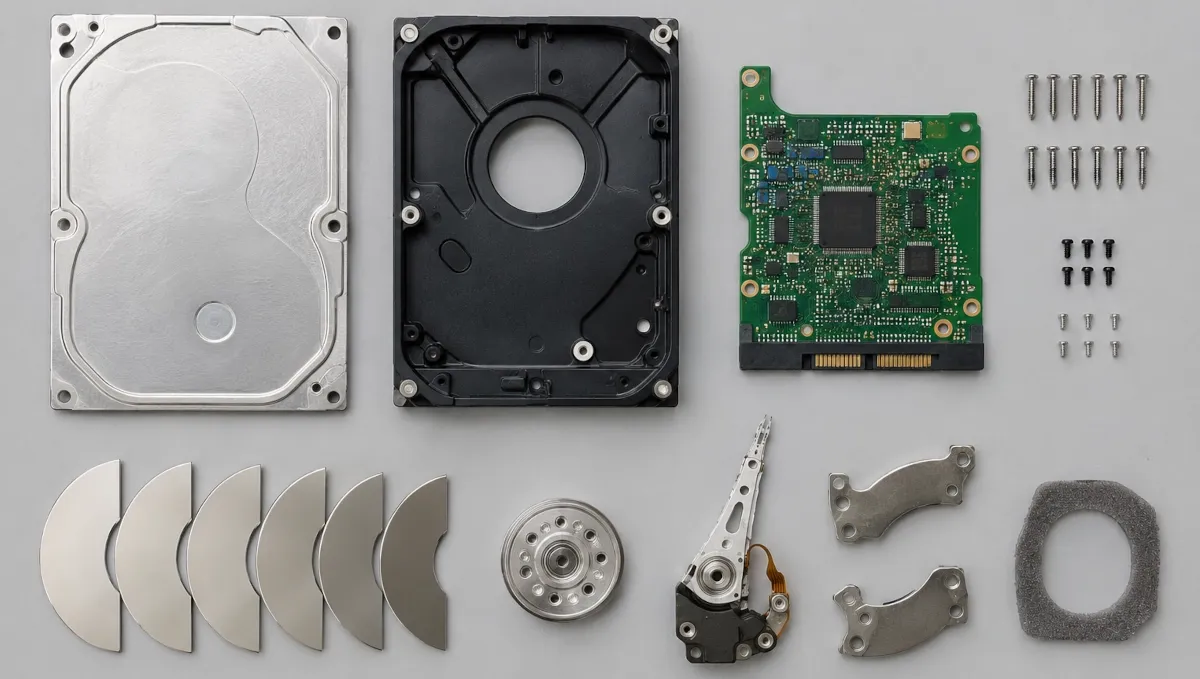
Comparing the two approaches
| Consideration | Data erasure | Physical destruction |
|---|---|---|
| Primary purpose | Sanitize data while preserving usable media | Permanently disable media and prevent recovery |
| Typical methods | Overwriting, device sanitize commands, cryptographic erase | Shredding, disintegration, pulverization, or other approved destruction techniques |
| Hardware reuse | Often possible | Storage media cannot be reused |
| Security assurance | Depends on method, media, verification, and validation | Depends on destruction method, media, and verified outcome |
| Best applications | Functional media approved for reuse or resale | Failed, unsupported, or restricted media |
| Documentation | Sanitization logs and certificates | Destruction records and certificates |
| Asset recovery | Can preserve more resale value | May reduce resale value when media is destroyed |
Neither method is universally better.
Data erasure can satisfy demanding security requirements when an appropriate sanitization technique is selected and validated. Physical destruction may be necessary when the media cannot be reliably sanitized or policy requires destruction.
The important decision is whether the selected method provides sufficient assurance for the information being retired.
How Secure Data Erasure Works
Data erasure uses software, firmware, or device-level commands to sanitize information stored on electronic media.
Depending on the technique, sanitization may involve replacing existing data, invoking a dedicated storage-device command, or securely eliminating encryption keys.
Different techniques provide different levels of assurance. A standard overwrite operation does not provide the same protection as a properly implemented purge operation.
Overwriting and logical clearing
Overwriting replaces existing information with nonsensitive data.
For compatible magnetic hard drives, appropriate overwriting techniques can prevent recovery through normal device interfaces.
However, overwriting through a standard host interface may not reach every location where data was previously stored.
This limitation is particularly important for SSDs.
Solid-state storage uses technologies such as wear leveling and overprovisioning. These systems can distribute data across physical memory locations that ordinary operating system commands cannot directly address.
Consequently, repeatedly overwriting an SSD does not necessarily sanitize every location containing sensitive information.
Device-level sanitization
Some storage devices support dedicated sanitization commands designed to address areas that ordinary read and write operations cannot access.
Depending on the device, these may include supported block-erase or other purge techniques.
The effectiveness of these commands depends on the storage technology, manufacturer implementation, and successful completion of the sanitization process.
Organizations should confirm which commands their devices support rather than assuming every drive can be sanitized using the same method.
Cryptographic erase
Cryptographic erase removes or renders inaccessible the encryption keys protecting stored information.
Without the required keys, properly encrypted data becomes computationally infeasible to recover under the method's security assumptions.
Cryptographic erase can be particularly efficient for supported self-encrypting storage devices and certain enterprise storage environments.
However, the presence of encryption alone does not guarantee a successful cryptographic erase.
The encryption implementation, key management, and other prerequisites must be evaluated before accepting it as an appropriate sanitization technique.
The takeaway: Secure data erasure requires more than selecting a software tool and running a command. The process must match the device, protect against the relevant recovery threats, and produce evidence of successful sanitization.
When Is Physical Data Destruction Necessary?
Physical data destruction is appropriate when an organization cannot achieve sufficient sanitization assurance through non-destructive methods or must destroy storage media under an applicable policy.
Common situations include:
Failed or inaccessible drives
A damaged drive may not respond to software commands. If its data cannot be reliably sanitized and verified, destruction may be the appropriate option.
Highly sensitive information
Certain organizational policies, contractual obligations, or regulatory requirements may mandate physical destruction of particular media.
Unsupported storage technology
Older storage devices may lack reliable sanitization interfaces. Their age or condition can also complicate verification.
Media with no intended reuse
When equipment has no remaining operational or resale value, physical destruction may provide an appropriate final disposition method.
Common physical destruction techniques
Shredding breaks storage media into smaller pieces. Disintegration and pulverization reduce media into smaller fragments or particles. Other methods may include melting or incineration under appropriately controlled conditions.
The effectiveness of physical destruction depends on the media and the resulting condition of the material.
Simply drilling a hole through a drive or damaging its enclosure does not necessarily make all stored information unrecoverable.
Likewise, a destruction technique suitable for one storage technology or data classification may be inappropriate for another.
NIST SP 800-88 Revision 2 emphasizes that destruction must make recovery infeasible, including against applicable advanced laboratory techniques.
Organizations should define approved destruction methods and acceptance criteria instead of assuming that any visible physical damage constitutes secure destruction.
What Does NIST 800-88 Require for Data Sanitization in 2026?
The National Institute of Standards and Technology published NIST SP 800-88 Revision 2, Guidelines for Media Sanitization, in September 2025.
It supersedes Revision 1 and provides updated guidance for establishing an organizational media sanitization program.
The publication identifies three primary sanitization methods.
1. Clear
Clear uses logical techniques to protect against simple, noninvasive recovery through the device's normal interface.
This may be appropriate in certain situations, but it does not provide the same level of assurance as Purge.
2. Purge
Purge uses techniques designed to make recovery infeasible using state-of-the-art laboratory methods while potentially preserving the storage device for reuse.
Depending on the technology, supported techniques may include dedicated sanitize commands, block erase, or cryptographic erase.
NIST recommends using Purge instead of Clear when possible.
3. Destroy
Destroy uses physical techniques that make recovery infeasible and leave the storage media unsuitable for subsequent data storage.
It is particularly relevant when appropriate Clear or Purge techniques cannot be applied or when destruction is required by policy.
What changed with Revision 2?
The updated publication places greater emphasis on establishing a complete media sanitization program rather than relying on individual erasure procedures.
One significant addition is the distinction between sanitization verification and sanitization validation.
Verification examines whether the selected sanitization technique completed successfully.
Validation determines whether the result provides acceptable protection for the information involved.
This distinction helps organizations avoid treating successful software execution as automatic proof of adequate data protection.
Revision 2 also updates guidance surrounding cryptographic erase and references technology-specific standards for identifying appropriate sanitization techniques.
For organizations retiring large quantities of enterprise equipment, the practical implication is clear: a repeatable, documented sanitization process matters as much as the individual tool or technique.
Why Secure Data Destruction Matters During Data Center Decommissioning
Retiring a single server is relatively straightforward. Decommissioning a data center can involve hundreds or thousands of assets distributed across multiple systems.
An enterprise environment may contain storage arrays, individual drives, backup appliances, network devices, and other hardware with persistent data.
Some equipment may remain operational during migration. Other assets may be scheduled for immediate removal.
Without a documented disposition plan, equipment can move between teams, facilities, and service providers without sufficient tracking.
This creates several risks:
- Storage media may be overlooked during inventory.
- Equipment may leave a facility before sanitization requirements are established.
- Asset records may not match the hardware actually removed.
- Failed sanitization attempts may not be escalated.
- Documentation may be incomplete when security or compliance teams request it.
- Reusable equipment may be destroyed unnecessarily, eliminating potential recovery value.
A secure decommissioning project should connect asset discovery, media sanitization, physical logistics, and final disposition reporting.
The process should begin before the equipment is unplugged.
How Chain of Custody Protects Retired IT Assets
Chain of custody documents who controlled equipment throughout its disposition process.
For enterprise ITAD projects, this includes tracking assets from their original location through transportation, processing, sanitization, resale, or recycling.
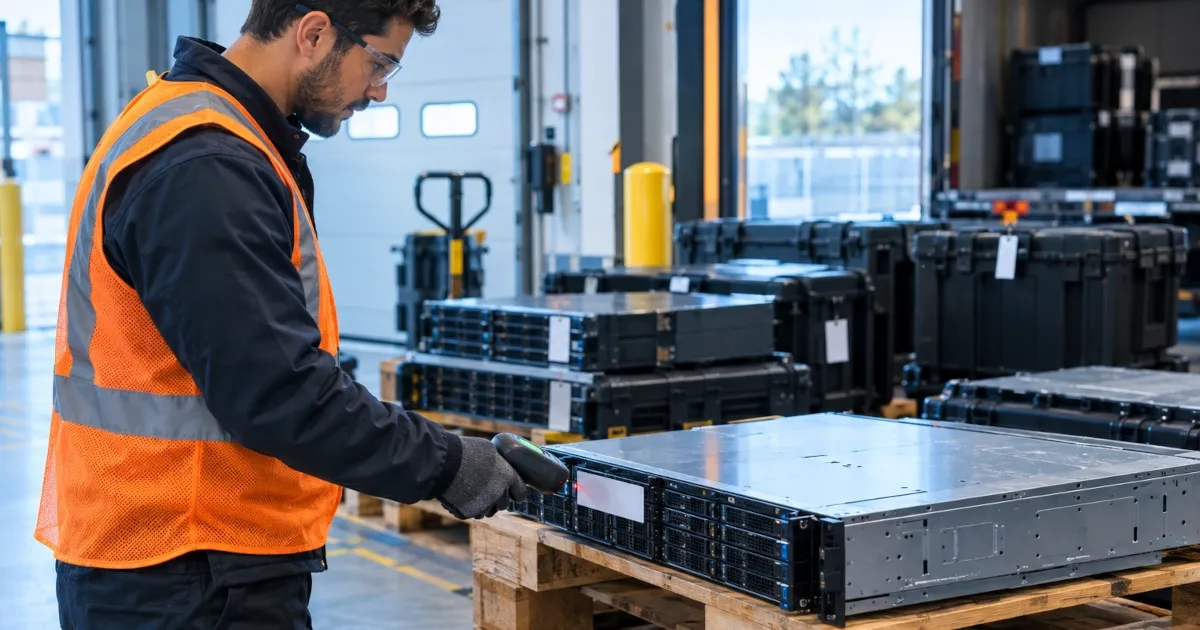
A strong chain-of-custody process should document:
- Equipment identification and serial numbers.
- Original location and asset ownership.
- Pickup or custody transfer details.
- Secure transportation and receiving records.
- Sanitization or destruction outcomes.
- Exceptions requiring additional processing.
- Final asset disposition.
This information supports internal accountability and helps organizations demonstrate how retired equipment was handled.
It is particularly important when multiple parties participate in a large data center decommissioning project.
What Is a Certificate of Data Destruction?
A certificate of data destruction documents that specified storage media underwent a destruction process.
For non-destructive sanitization, organizations may receive a certificate of sanitization or erasure instead.
Effective documentation should identify the assets involved, the method applied, the processing date, and the outcome.
NIST SP 800-88 Revision 2 includes a sample Certificate of Sanitization and discusses information that organizations should retain.
Depending on the process, records may include:
| Documentation field | Purpose |
|---|---|
| Asset or media serial number | Identifies the processed device |
| Manufacturer and model | Establishes media type |
| Sanitization method | Records Clear, Purge, or Destroy |
| Specific technique | Identifies the process applied |
| Tool and version | Supports repeatability and auditability |
| Verification result | Documents process completion |
| Validation result | Records acceptance or rejection |
| Date and responsible personnel | Supports accountability |
A certificate is evidence of a documented process. Its existence alone does not establish that the underlying method was appropriate or correctly executed.
Organizations should evaluate both the documentation and the provider's operational controls.
How Secure Data Erasure Preserves IT Asset Value
Secure ITAD is often discussed as a security and compliance function.
However, retiring infrastructure also creates an opportunity to recover capital from equipment that still has a useful secondary-market life.
Enterprise servers, networking devices, and storage systems may retain value after an organization no longer needs them.
When compatible storage media can be reliably sanitized, the equipment may remain eligible for reuse or resale.
Physical destruction of drives can reduce the value of some configurations or introduce replacement costs before resale.
That does not mean an organization should choose erasure simply to maximize its return. Security and contractual requirements must determine which sanitization methods are acceptable.
Once those requirements are established, organizations can evaluate equipment for recovery opportunities.
Which retired IT assets may have resale value?
Potentially marketable equipment includes:
- Enterprise rack and blade servers
- Storage systems and compatible components
- Network switches and routers
- Server memory and processors
- Other functional enterprise hardware with secondary-market demand
Value depends on factors such as model, age, configuration, condition, market demand, and whether the equipment can be sold in a usable state.
An equipment buyback assessment can help establish which assets have recoverable value and which should be routed to responsible recycling.
For organizations retiring entire environments, the recovered capital may help offset decommissioning costs or support other infrastructure investments.
Learn more about ReluTech's asset purchase and leaseback solutions.
Secure Data Destruction and ITAD During Cloud Migration
Cloud migration is a common reason enterprises retire significant quantities of infrastructure.
As workloads move away from on-premises environments, organizations may no longer need the physical servers, storage arrays, and networking hardware that supported them.
However, that equipment cannot always be removed immediately.
Applications may migrate in phases, legacy systems may need to remain operational, and hardware may contain information subject to retention or security requirements.
An effective retirement plan should coordinate three activities.
Protect the data
Identify data-bearing media and establish sanitization or destruction requirements before equipment changes hands.
Maintain operational continuity
Determine when equipment can be safely decommissioned without disrupting workloads that remain in production.
Evaluate financial recovery
Assess retired hardware for resale or buyback opportunities once security requirements have been addressed.
These activities should not operate as isolated projects.
Coordinating them helps reduce operational risk while identifying opportunities to recover value from infrastructure that no longer supports business requirements.
For cloud migration projects, equipment buybacks can also provide an additional source of capital.
In some situations, a purchase leaseback can provide upfront liquidity while equipment remains operational during a transition. This is distinct from buying retired hardware outright.
The appropriate structure depends on asset ownership, financing requirements, and the migration timeline.
How to Choose a Secure Data Destruction Provider
Selecting a secure ITAD provider requires evaluating more than the availability of shredding equipment or erasure software.
An enterprise provider should be able to explain how it protects assets throughout their entire disposition lifecycle.
Use the following checklist during vendor evaluations.
| Evaluation question | What to look for |
|---|---|
| Does the provider follow current NIST guidance? | Documented sanitization policies referencing appropriate standards |
| Can it process different storage technologies? | Methods matched to HDDs, SSDs, and other media |
| Does it maintain chain of custody? | Serialized inventory and transfer records |
| Does it provide certificates? | Records tied to identifiable assets and processes |
| How are failures handled? | Defined exception and escalation procedures |
| Are relevant facilities and processes certified? | Verifiable certifications and applicable scope |
| Can it recover equipment value? | Transparent valuation and buyback options |
| Can it support large decommissioning projects? | Logistics, removal, and disposition coordination |
Why R2v3 certification matters
R2v3 is a recognized certification standard for responsible electronics reuse and recycling.
Its requirements address areas such as environmental management, data security, worker safety, and downstream accountability.
However, certification scope matters.
The R2v3 standard includes specialized process requirements for activities such as data sanitization. Organizations should verify whether a provider's certification covers the specific services and facilities involved.
The organization behind the standard, Sustainable Electronics Recycling International (SERI), explains the differences between R2v3 Core Data Security requirements and Appendix B Data Sanitization requirements.
For enterprise ITAD projects, both documented security controls and appropriate processing qualifications should be evaluated before selecting a provider.
How ReluTech Supports Secure Data Destruction and IT Asset Recovery
ReluTech helps enterprises manage the retirement of data center infrastructure through secure IT asset disposition, data erasure and destruction, decommissioning, and equipment value recovery.
Its services connect the physical retirement of infrastructure with the financial requirements of modernization projects.
ReluTech's capabilities include:
Secure IT asset disposition
Managed retirement of servers, storage, networking equipment, and other enterprise infrastructure, including data sanitization, destruction, and responsible downstream processing.
Data center decommissioning
Coordinated equipment removal and logistics for infrastructure refreshes, facility consolidations, and cloud migration projects.
IT equipment buybacks
Evaluations of retired hardware to identify opportunities for resale and financial recovery.
Purchase leaseback
Options for organizations that want to unlock value from existing hardware while continuing to use it during a planned transition.
Responsible electronics recycling
Processing of equipment that cannot be reused or economically remarketed through appropriate recycling channels.
ReluTech announced its R2v3 certification in 2024, alongside ISO 9001, ISO 14001, and ISO 45001 certifications.
By connecting security, decommissioning, and asset recovery, ReluTech helps organizations address the complete retirement process rather than treating data destruction as an isolated task.
Explore ReluTech's IT Asset Disposition Services.
Frequently Asked Questions About Secure Data Destruction
Is data erasure as secure as physical destruction?
Data erasure can provide strong security assurance when the method is appropriate for the storage device and the result is validated. Physical destruction is appropriate when media cannot be reliably sanitized or applicable requirements mandate destruction. Neither is universally preferable.
Can data be recovered after secure erasure?
Properly executed and validated sanitization is designed to make recovery infeasible at the required assurance level. However, effectiveness depends on the technique and storage technology. Deleting files or formatting a drive is not equivalent to verified secure sanitization.
Does NIST 800-88 require physical hard drive destruction?
No. NIST SP 800-88 Revision 2 describes Clear, Purge, and Destroy methods. The appropriate choice depends on data sensitivity, media type, reuse plans, and organizational requirements. Physical destruction is not mandatory for every retired hard drive.
Can SSDs be securely erased?
Yes, provided the device supports an appropriate sanitization method that can be successfully executed and validated. Standard overwriting may not address inaccessible flash-memory locations. Supported device-level sanitization commands or properly implemented cryptographic erase may be appropriate.
What is the difference between data destruction and ITAD?
Data destruction focuses on preventing recovery of information. IT asset disposition includes the broader retirement process, such as equipment tracking, data sanitization, logistics, resale, value recovery, and responsible recycling.
Can an enterprise sell servers after secure data erasure?
Yes. Functional servers may be eligible for resale after applicable sanitization requirements have been satisfied. Their value depends on configuration, condition, demand, and any components that must be removed or replaced.
What is the difference between a certificate of erasure and a certificate of destruction?
A certificate of erasure or sanitization documents a non-destructive sanitization process. A certificate of destruction documents physical destruction of storage media. Both should identify the affected assets and the method used.
Securely Retire Your IT Infrastructure and Recover Its Value
Retiring enterprise infrastructure should not force organizations to choose between protecting sensitive information and recovering value from unused equipment.
A properly managed ITAD process establishes security requirements first, selects appropriate sanitization methods, documents the results, and evaluates eligible hardware for reuse or resale.
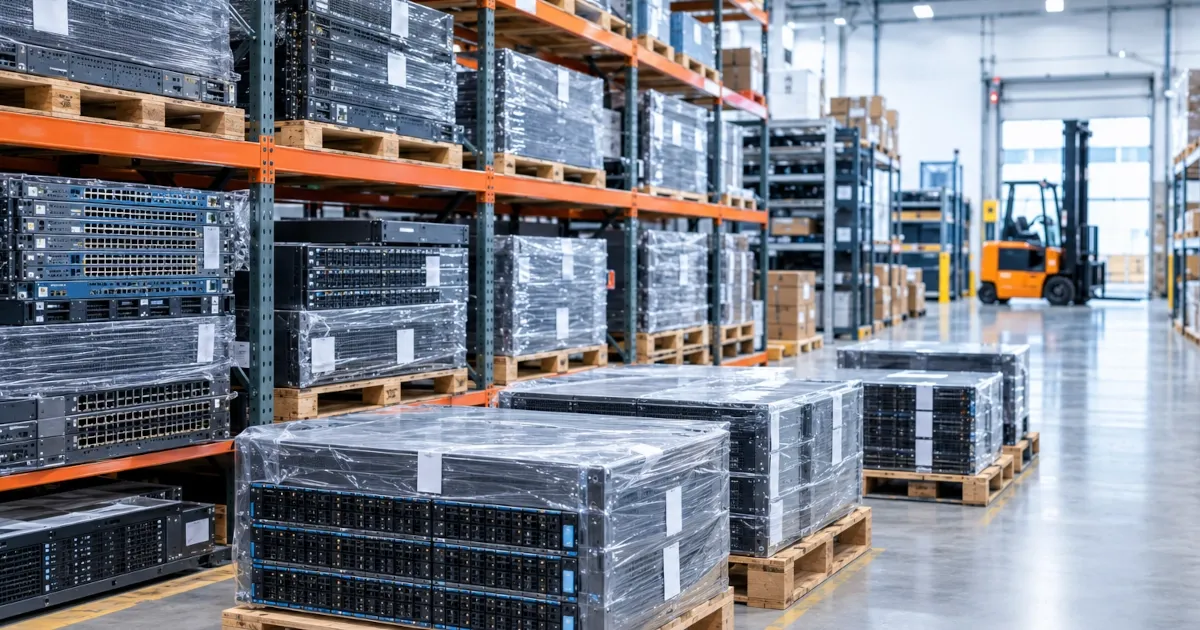
ReluTech helps enterprises coordinate secure data destruction, data center decommissioning, and hardware buyback opportunities as part of a broader infrastructure retirement strategy.
Before you dispose of retired servers, storage, or networking equipment, find out what they could be worth.
Explore ReluTech's Secure ITAD Services
Evaluate Your Equipment for Buyback
